Dans la logistique mondiale de la chaîne du froid, la stabilité de la température détermine la qualité, la sécurité et la conformité des produits. Pour les exportateurs de fruits de mer, viande, aliments congelés, produits pharmaceutiques et biologiques, les blocs de glace sèche sont devenus une solution de refroidissement privilégiée en raison de leur température ultra-basse (-78,5°C) et de leur sublimation sans résidu. Parmi les différentes options, un bloc de glace sèche de taille personnalisée offre des avantages opérationnels et économiques significatifs.
Le rôle des blocs de glace sèche dans l'expédition en chaîne du froid
Contrairement aux packs de glace ou de gel traditionnels, la glace sèche ne fond pas en liquide. Elle se sublime directement du CO₂ solide en gaz, garantissant que les produits restent secs et non contaminés. Cela rend les blocs de glace sèche idéaux pour :
- L'exportation alimentaire à longue distance
- Fret aérien de fruits de mer et de viande congelés
- Transport de vaccins et de produits pharmaceutiques
- Livraison en chaîne du froid pour le commerce électronique transfrontalier
Parce que la durée de l'expédition internationale varie, il est crucial de choisir la bonne taille et le bon poids de glace sèche. Des blocs trop grands augmentent le coût, tandis que des blocs trop petits risquent de provoquer des fluctuations de température.
Pourquoi choisir des solutions de blocs de glace sèche de taille personnalisée ?
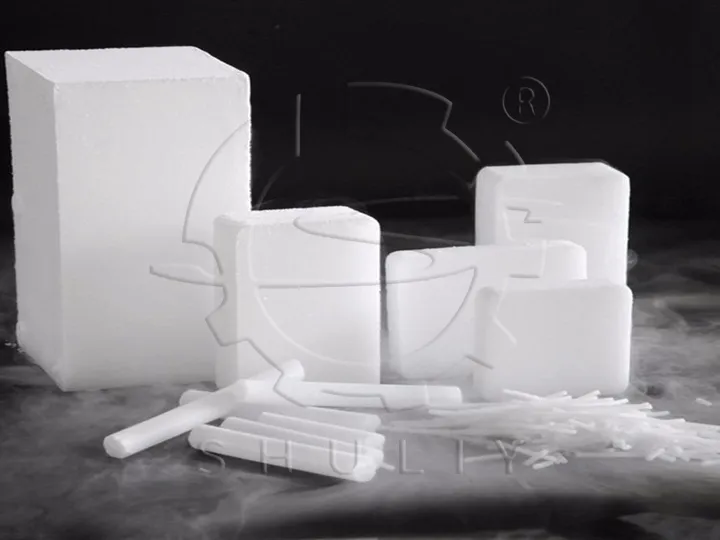
Un bloc de glace sèche de taille personnalisée permet aux exportateurs d'optimiser l'efficacité de l'emballage et la performance de refroidissement. La personnalisation est particulièrement importante lorsque :
- Les dimensions du carton sont fixes
- Les produits nécessitent un contrôle précis de la température
- Le délai d'expédition varie selon la destination
- Les limites de poids du fret aérien s'appliquent
En adaptant la taille du bloc à celles de la boîte, les entreprises réduisent l'espace perdu, améliorent la performance de l'isolation et contrôlent plus précisément la consommation de CO₂. Cela entraîne des coûts logistiques plus faibles et une meilleure fiabilité de la chaîne du froid.
Investir dans un équipement de production de glace sèche
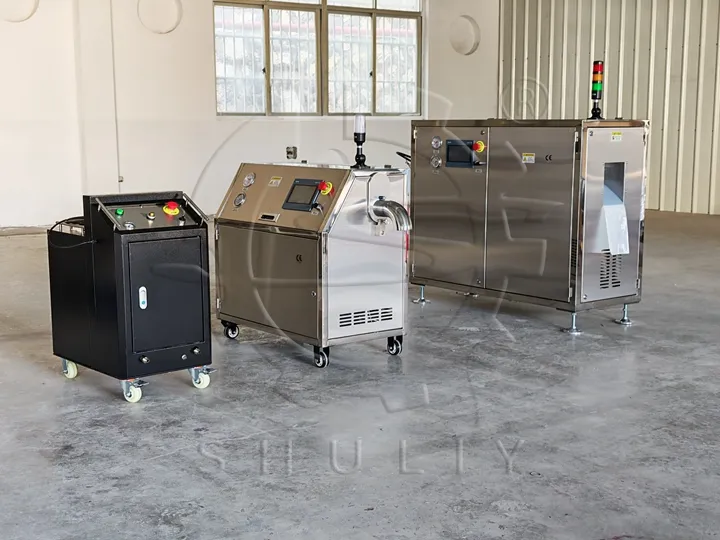
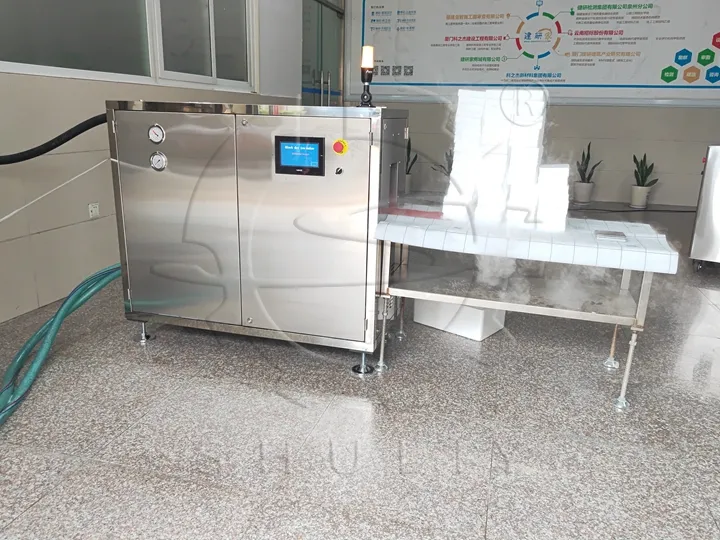
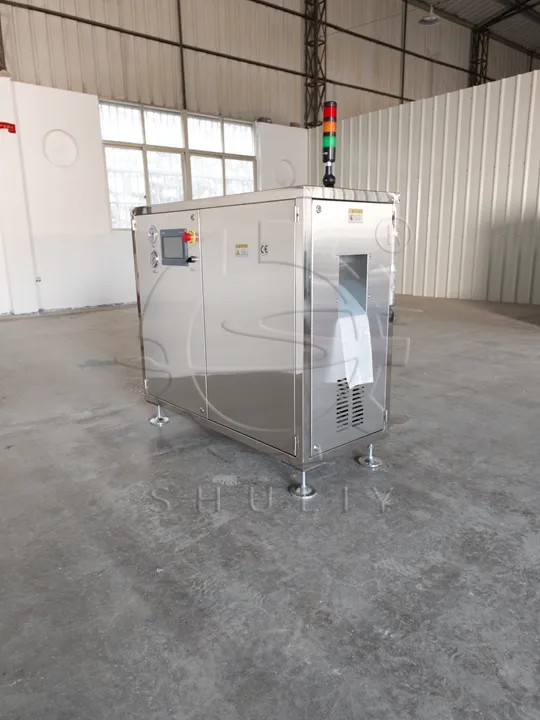
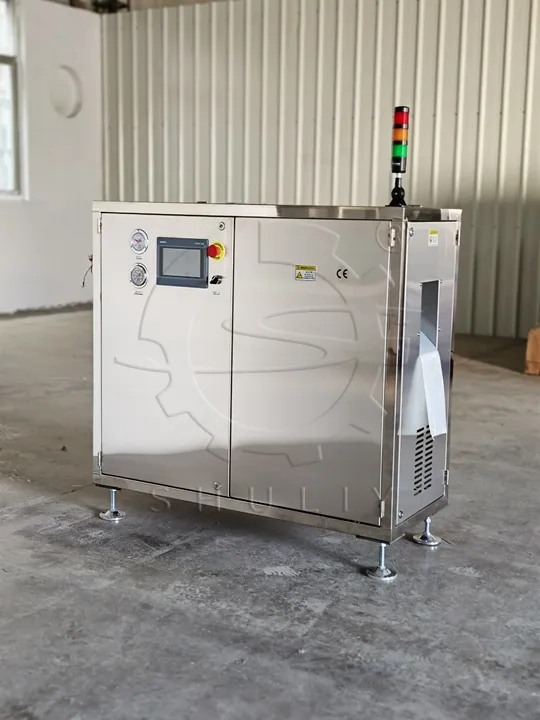
Pour les entreprises ayant une demande continue, produire de la glace sèche en interne ou en usine est plus économique que de l'acheter auprès de fournisseurs. Lors de l'évaluation d'une installation de production, les entreprises prennent souvent en compte le prix de la machine à glace sèche , la capacité de production (par exemple, 100kg/h–500kg/h), la consommation d'énergie et la flexibilité des moules.
Les machines modernes à glace sèche supportent des moules interchangeables, permettant aux fabricants de produire différentes tailles de blocs selon les exigences des clients. Cette flexibilité est particulièrement précieuse pour les exportateurs desservant plusieurs industries.
Un stockage approprié : la clé pour minimiser les pertes
Après la production, un stockage correct est essentiel. Un conteneur de stockage de glace sèche professionnel avec une isolation haute densité peut réduire considérablement la perte par sublimation. Ces conteneurs maintiennent des températures internes basses et prolongent la durée de stockage, assurant une efficacité maximale avant l'expédition.
Pour les exportateurs et les opérateurs de la chaîne du froid, combiner des blocs de glace sèche de taille personnalisée avec des solutions de stockage appropriées crée un système de refroidissement complet et rentable.